
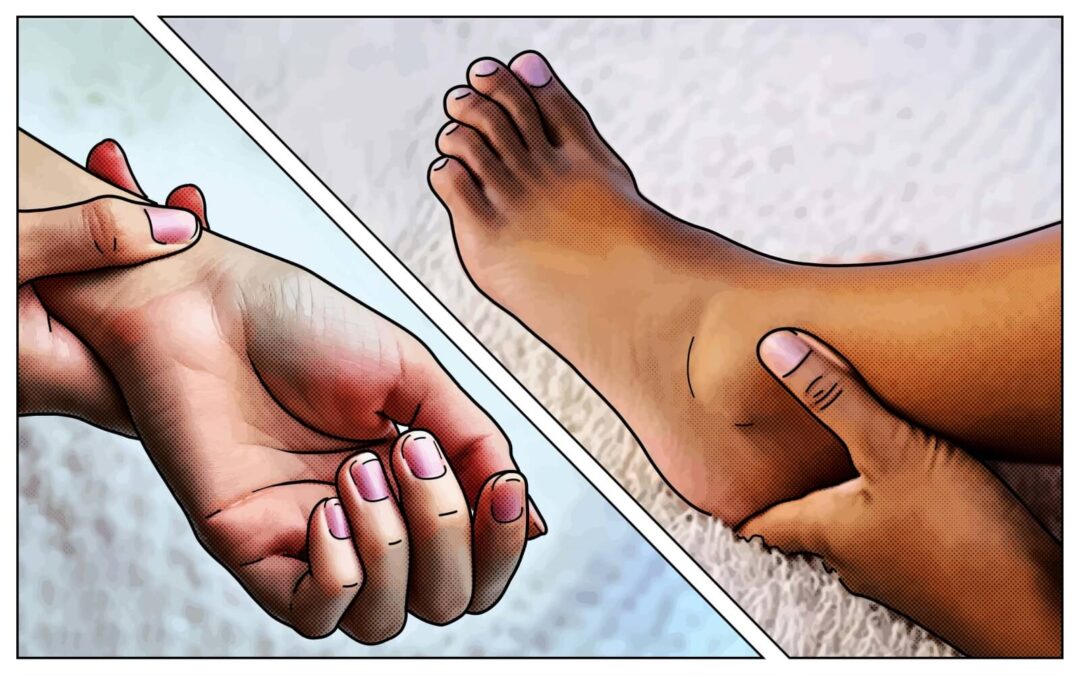
Swelling and Inflammation are closely related but distinct physiological responses. Understanding these differences is crucial for those suffering from Traumatic Brain Injury (TBI) and Post-Traumatic Stress Disorder (PTSD), as the benefits of Hyperbaric Oxygen Therapy (HBOT) address both conditions in different ways.
Inflammation is the body’s immune response to injury or infection. Swelling is one of its visible signs: fluid collecting in the surrounding tissue. Put simply, inflammation is the process and swelling is a symptom of it. You can have inflammation without visible swelling, and swelling without active inflammation.
Swelling
Swelling is the accumulation of fluid in tissues, often resulting from injury, infection, or other medical conditions. It is a visible symptom that typically manifests as puffiness or enlargement of the affected area.
- Relevance to TBI & PTSD: For individuals with TBI, swelling can increase intracranial pressure, which exacerbates brain injury symptoms and may lead to further damage. Reducing swelling can relieve pressure, improve blood flow, and allow the brain to heal more effectively.
Inflammation
Inflammation is the body’s immune response to injury or infection, characterized by redness, heat, pain, and swelling. It involves the activation of immune cells and the release of inflammatory mediators.
- Relevance to TBI & PTSD: Chronic inflammation in the brain can contribute to ongoing neurological damage and cognitive deficits. Inflammation is a critical factor in the development and persistence of PTSD symptoms. Reducing inflammation can help minimize further damage to brain tissue, improve cognitive function, and alleviate symptoms associated with PTSD.
Swelling and inflammation in the brain
In most of the body, swelling has somewhere to expand into. The brain does not have that luxury. It sits inside a rigid skull with a fixed volume, so even modest fluid accumulation raises pressure inside the head. This is where the distinction between the two stops being academic.
Cerebral edema is swelling of brain tissue. Rising intracranial pressure compresses tissue and restricts blood flow, which reduces the oxygen reaching cells that are already struggling.
Neuroinflammation is the immune response inside the brain, driven largely by specialized immune cells called microglia. In the short term, microglia clear debris and support repair. When they stay activated, they release inflammatory signals that damage the tissue they were meant to protect.
After a traumatic brain injury, the initial impact is only the first part of the problem. What follows over the hours, days and months afterward is a secondary cascade, involving both swelling and a prolonged inflammatory response, and that cascade often causes more lasting harm than the original injury. For veterans exposed to repeated blast events, this process can continue quietly for years while scans look unremarkable and symptoms get attributed to something else. Our article on the cost of blast trauma in veterans looks at how that plays out in practice.
Chronic neuroinflammation is also increasingly studied in connection with PTSD, which helps explain why brain injury and psychological symptoms so often travel together.
How hyperbaric oxygen therapy addresses both
Hyperbaric oxygen therapy involves breathing 100% oxygen inside a chamber pressurized above normal atmospheric pressure, typically between 1.5 and 2.5 ATA. Under those conditions, oxygen dissolves directly into blood plasma rather than relying solely on red blood cells to carry it, so it can reach tissue that compromised circulation is struggling to supply.
It is one of the few interventions studied for its effect on both mechanisms at once.
On swelling. High-concentration oxygen causes arterioles to narrow, a response known as hyperoxic vasoconstriction. Less fluid leaks into the surrounding tissue, which reduces edema. Because the blood arriving carries far more dissolved oxygen than usual, oxygen delivery is maintained despite the reduced flow. This combination, less fluid with no oxygen penalty, is the basis for HBOT’s established use in treating swelling in several approved medical indications.
On inflammation. Research indicates that hyperbaric oxygen influences the expression of genes involved in the inflammatory response and reduces the circulation of pro-inflammatory signaling molecules, shifting the local environment toward repair.
Frequently Asked Questions
Is swelling the same as inflammation?
No. Inflammation is an immune response. Swelling is fluid accumulation, and it is one of several possible signs that inflammation is occurring. Swelling can also occur entirely without inflammation.
Can you have inflammation without swelling?
Yes, and it is common. Chronic low grade inflammation often produces no visible swelling at all, which is why it can go unnoticed for years.
Can you have swelling without inflammation?
Yes. Fluid retention from long periods of sitting, high sodium intake, pregnancy, certain medications, or circulatory and lymphatic conditions can all cause swelling with no immune response involved.
Is swelling a good thing or a bad thing?
Short term swelling after an injury is part of normal healing and delivers the cells needed for repair. Swelling that persists for weeks, appears without a clear cause, or affects both legs or the whole body is worth having evaluated.
How long should swelling last after an injury?
Most minor injury swelling peaks within two to three days and improves substantially over one to two weeks. Swelling that is still worsening after several days, or that has not meaningfully improved after two weeks, should be assessed.
Does reducing inflammation reduce swelling?
When the swelling is being driven by inflammation, yes. When it is caused by circulation, lymphatic drainage or fluid balance, addressing inflammation will not help much, which is why identifying the cause comes first.
What is neuroinflammation?
Neuroinflammation is inflammation within the brain and nervous system, driven mainly by microglia. When it becomes chronic, it is associated with cognitive difficulties, mood symptoms and neurodegenerative conditions.
References
- Cleveland Clinic. “Inflammation: What Is It, Causes, Symptoms & Treatment.” https://my.clevelandclinic.org/health/symptoms/21660-inflammation
- Harvard Health Publishing. “Understanding Acute and Chronic Inflammation.” https://www.health.harvard.edu/staying-healthy/understanding-acute-and-chronic-inflammation
- Harvard Medicine Magazine. “Inflammation and Brain Health.” https://magazine.hms.harvard.edu/articles/inflammation-and-brain-health
- StatPearls, NCBI Bookshelf. “Hyperbaric Cardiovascular Effects.” https://www.ncbi.nlm.nih.gov/books/NBK482231/
- Undersea and Hyperbaric Medical Society. Approved indications for hyperbaric oxygen therapy. https://www.uhms.org/